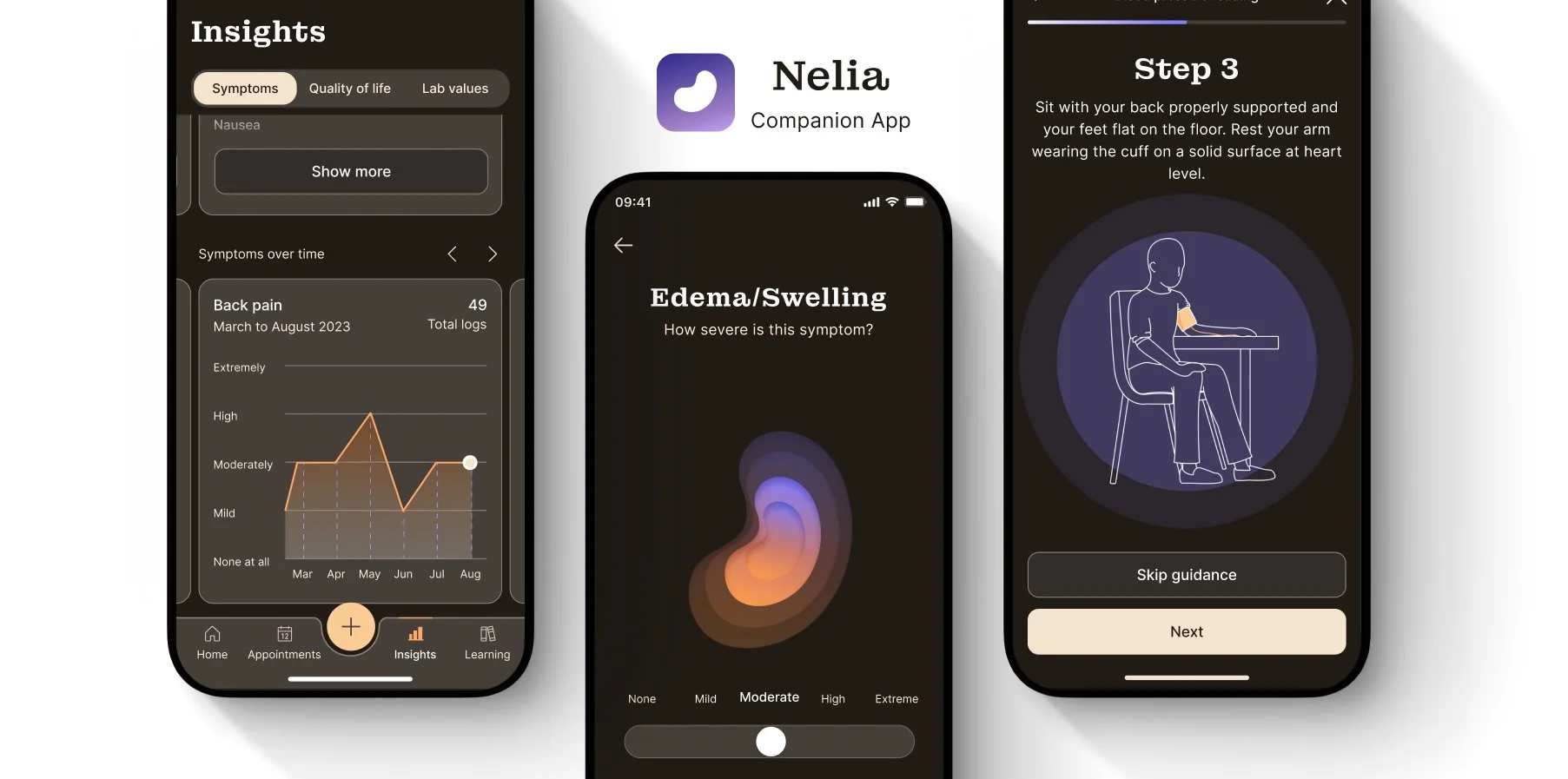
Challenge
30% of patients with rare kidney disease experience anxiety or depression over the course of their disease. Many young patients transitioning from parental care to self-management feel overwhelmed. They struggle to deal with daily symptoms, complex medication regimes, and multiple clinical appointments.
Key features of solution
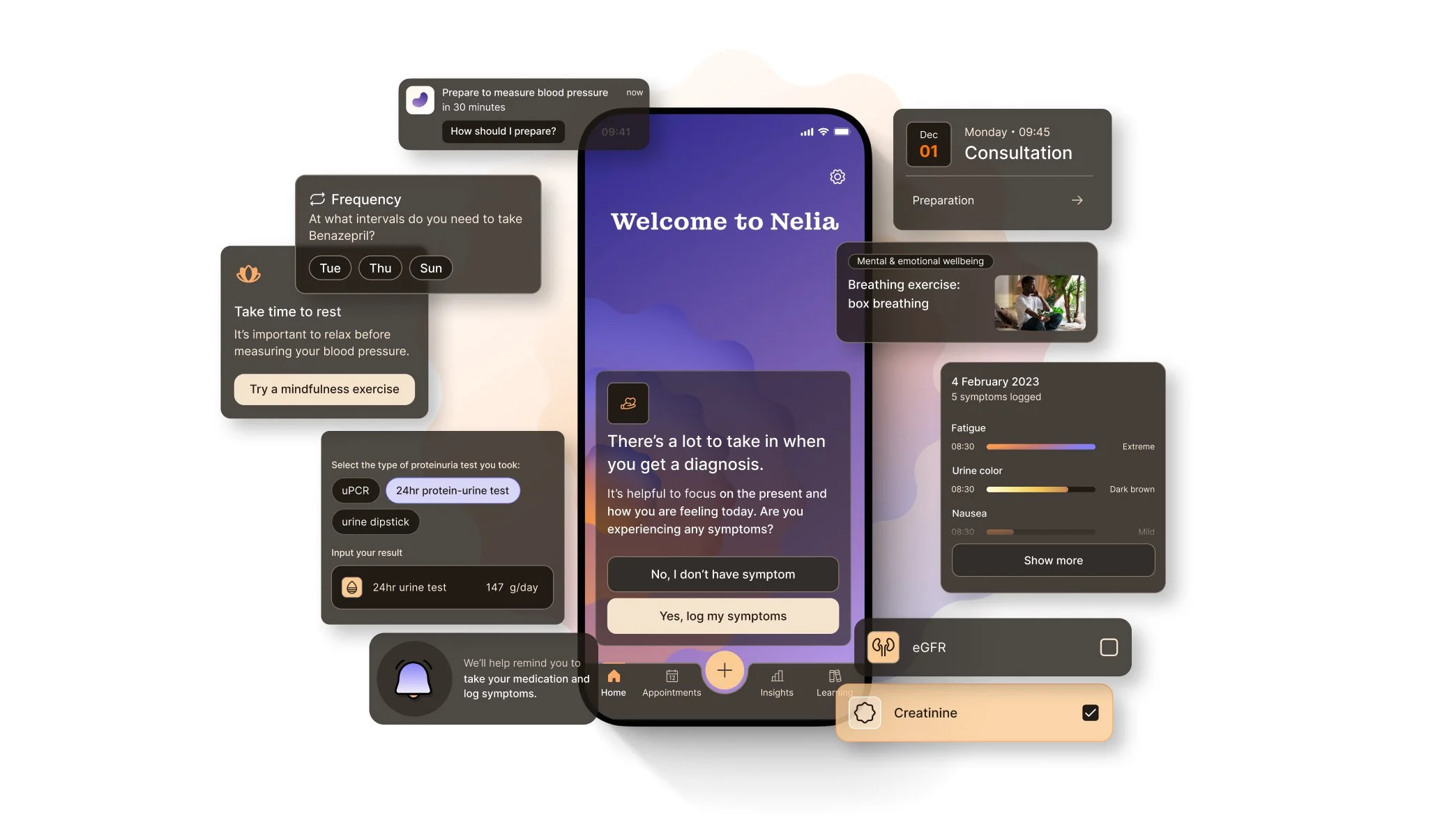
Documentation of lab values eg. proteinuria, blood pressure and creatinine.
Tracking of symptoms and impact on quality of life.
Mental health support focused on managing uncertainty, low mood, and stress.
Treatment schedule and reminders
Data visualisations of health information over time.
Preparation for and reflection on appointments.
Light and dark mode capabilities.
My Responsibilities
Lead designer for duration of the project.
Research, insights analysis, and concept creation.
Usability tests and user feedback.
Product style guide and promotional material.
UX flows and specifications.
Stakeholder management and collaboration.
Pixel-perfect UI and handover to developers.
Key findings from discoveries
Pain point
Patients struggle to communicate their experience with doctors.
Job to be done
Help patients feel more prepared for appointments.
“When I have a doctor’s appointment, I know I have to come prepared. I try my best to document some of my symptoms and feeling before I go in, but I’m nervous I will forget to mention something or not be taken seriously. I wish I felt more prepared.”
Concept Exploration
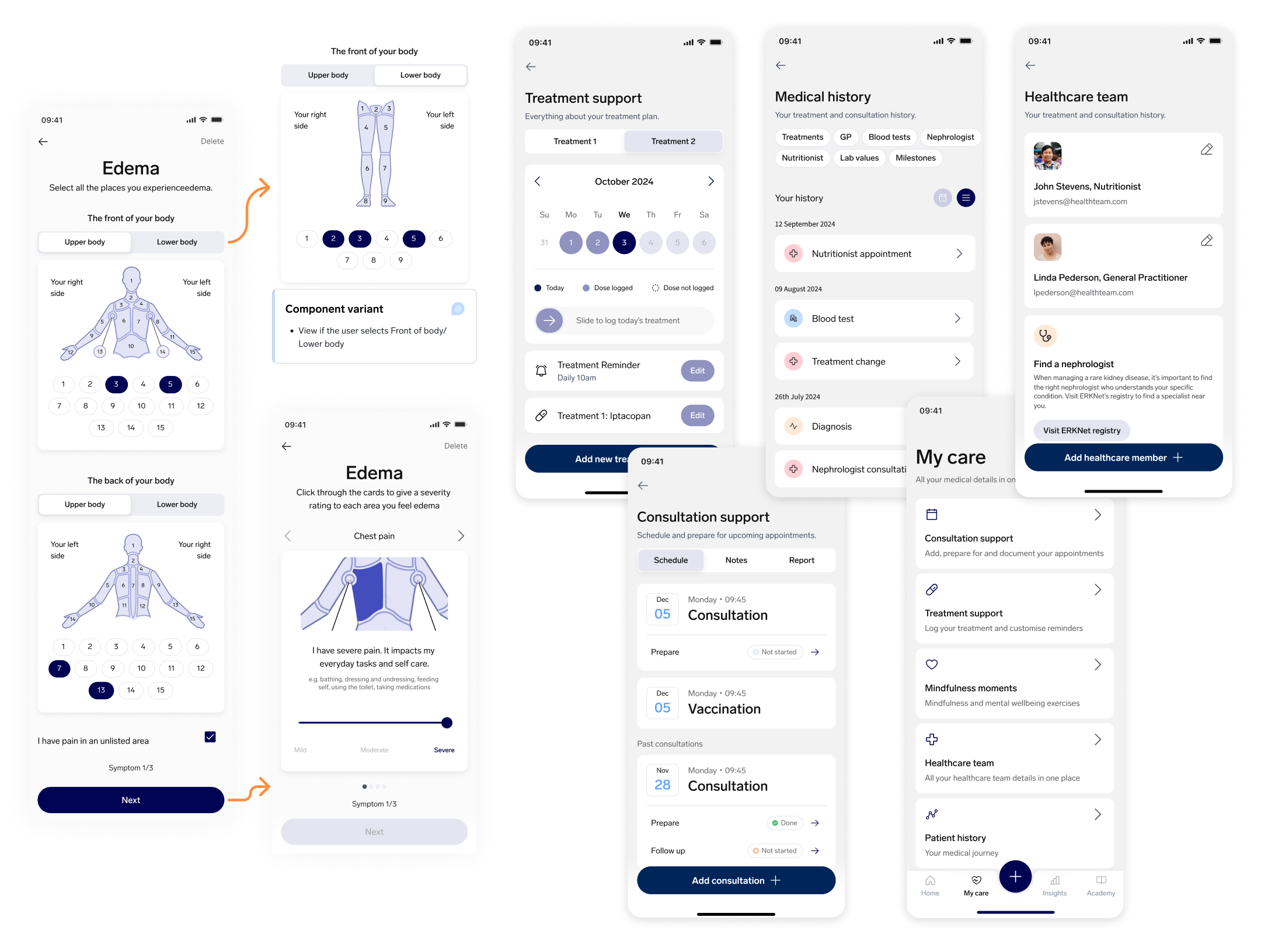
Symptom tracking, consultation support, medical history.
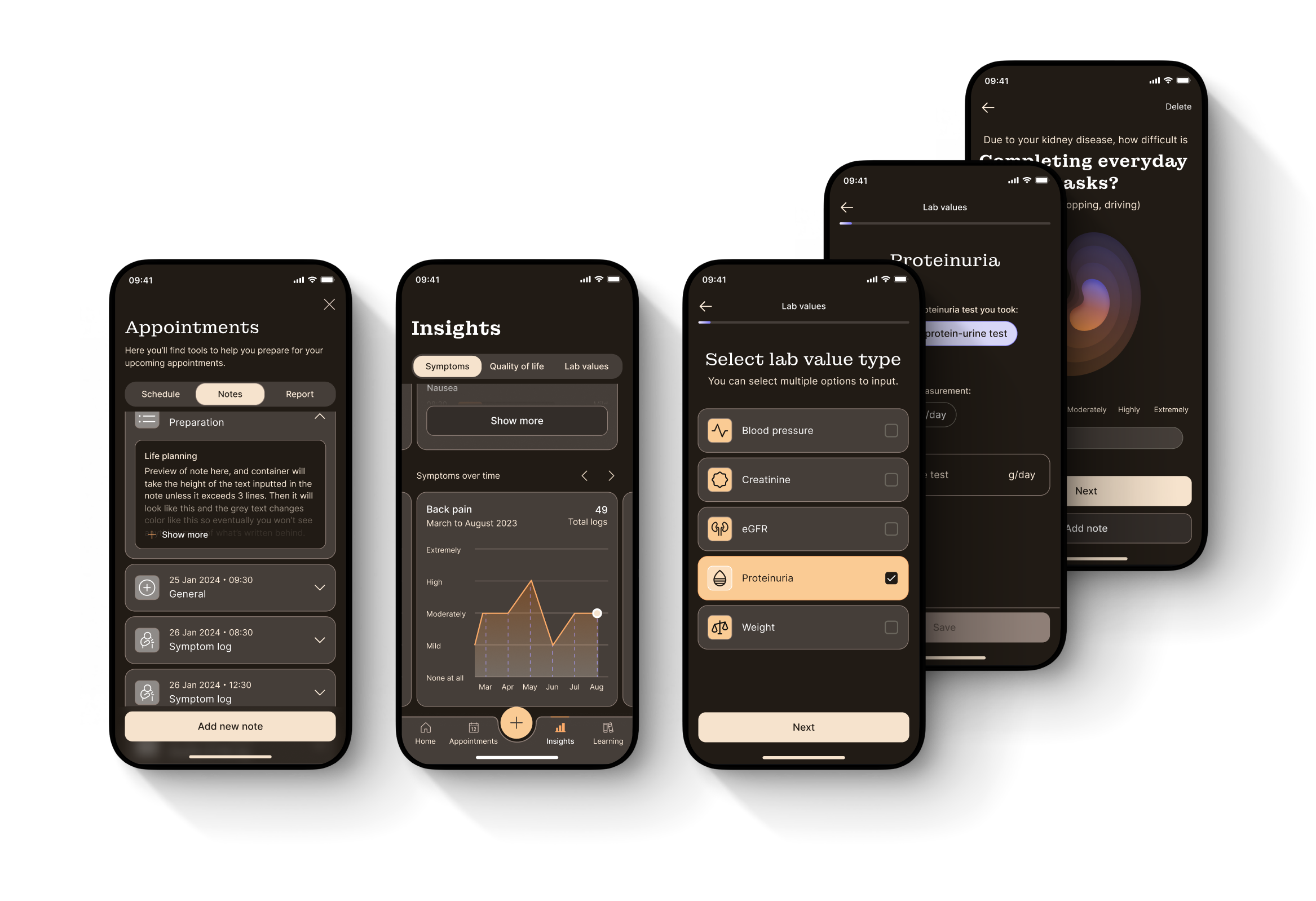
Final UI (Dark mode)
Consultation preparation notes, data visualisation, health tracking.
Pain point
Patients could be managing up to 7 medications a day.
Job to be done
Support patients in their treatment schedule.
“I had to take medication every six hours, even during the night, and there were so many other pills and treatments on top of that. It felt like my whole life revolved around managing my medicines instead of just being a normal teenager.”
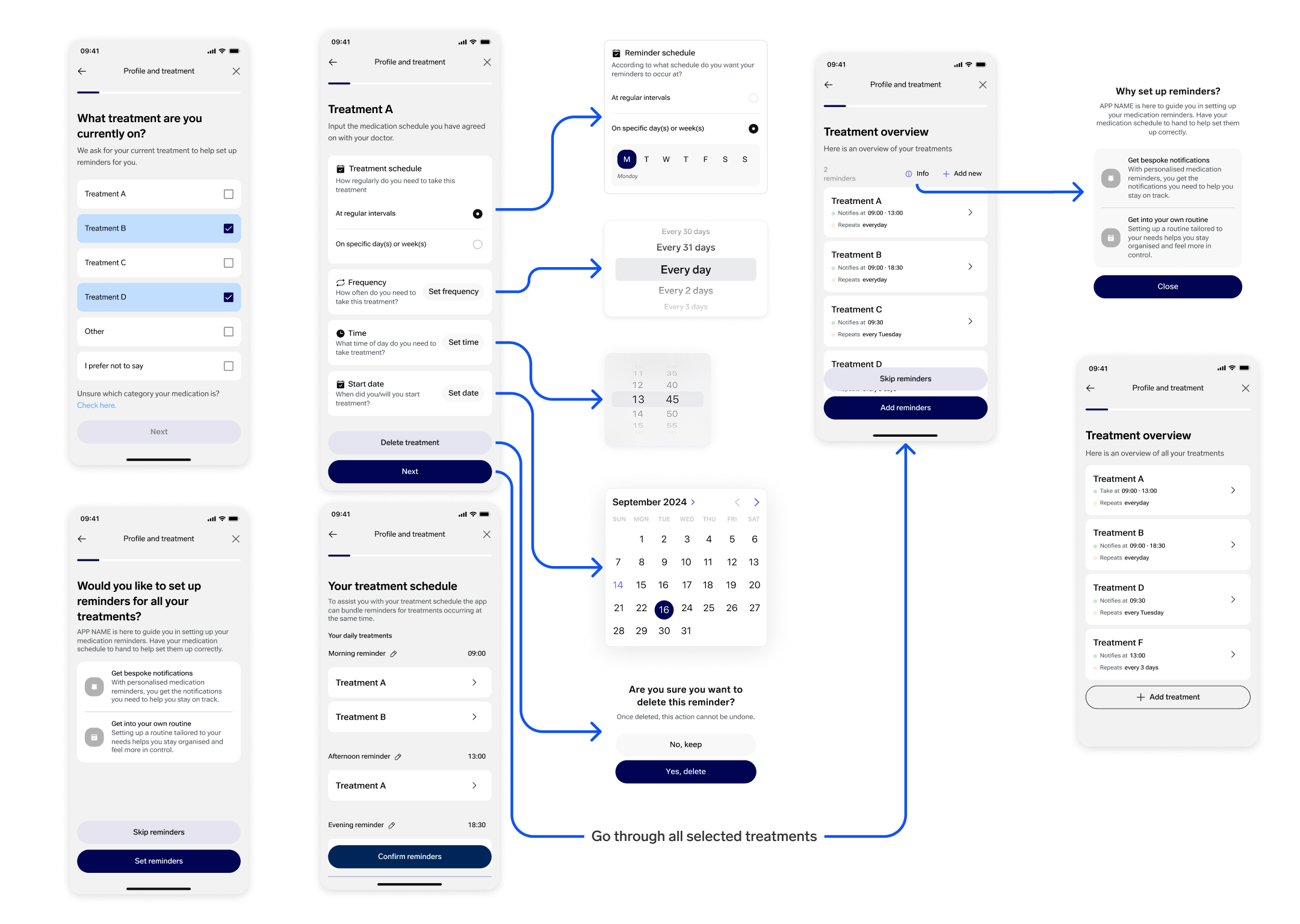
Concept exploration
Treatment scheduling, treatment reminders, treatment overview.
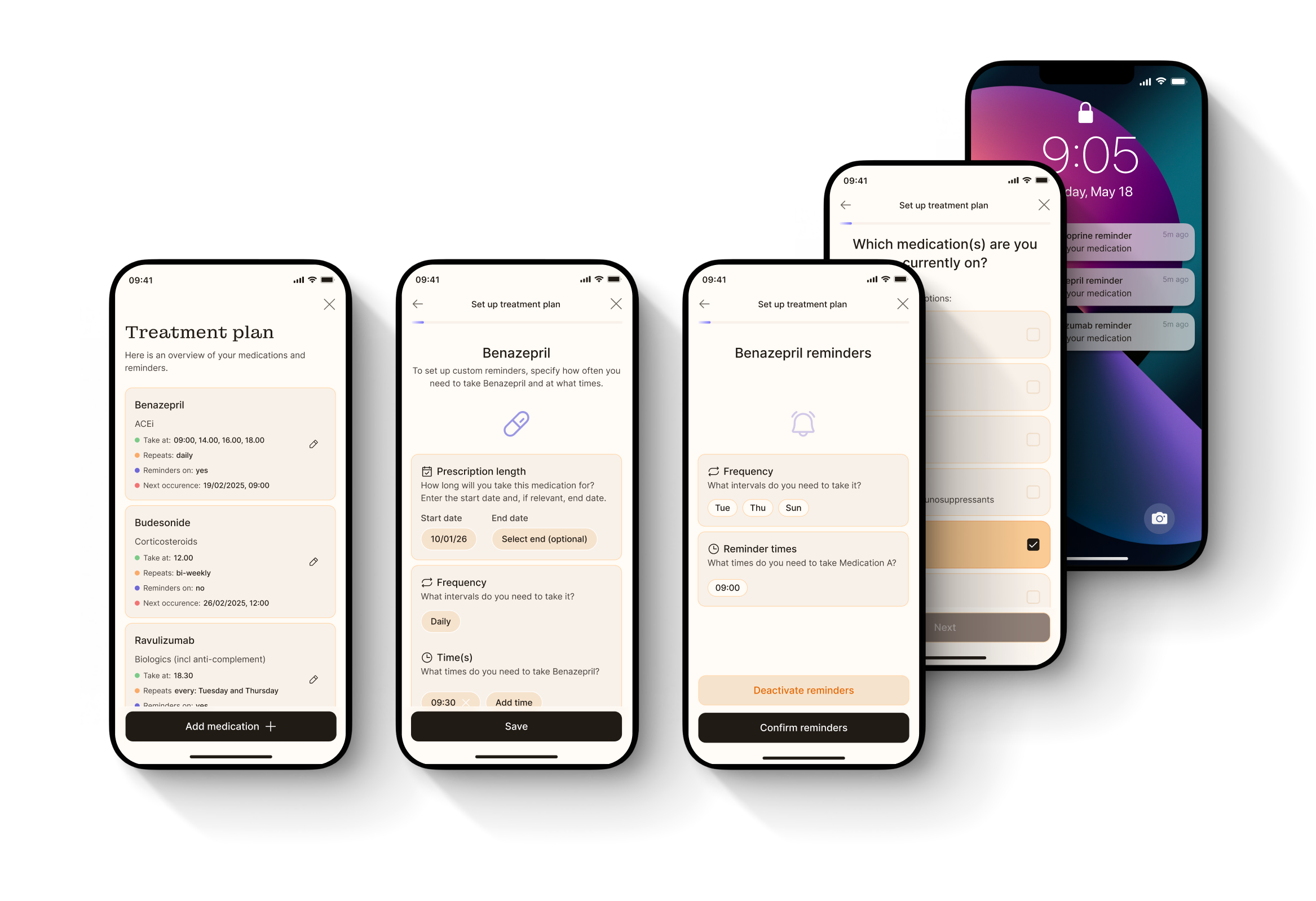
Final UI (Light mode)
Treatment plan, treatment scheduling and treatment reminders.
Pain point
A high number of patients struggle with their mental health.
Job to be done
Provide emotional support and relaxation techniques.
“Mood swings were hard on me, and everyone around me. You feel like you’re going through it alone.”
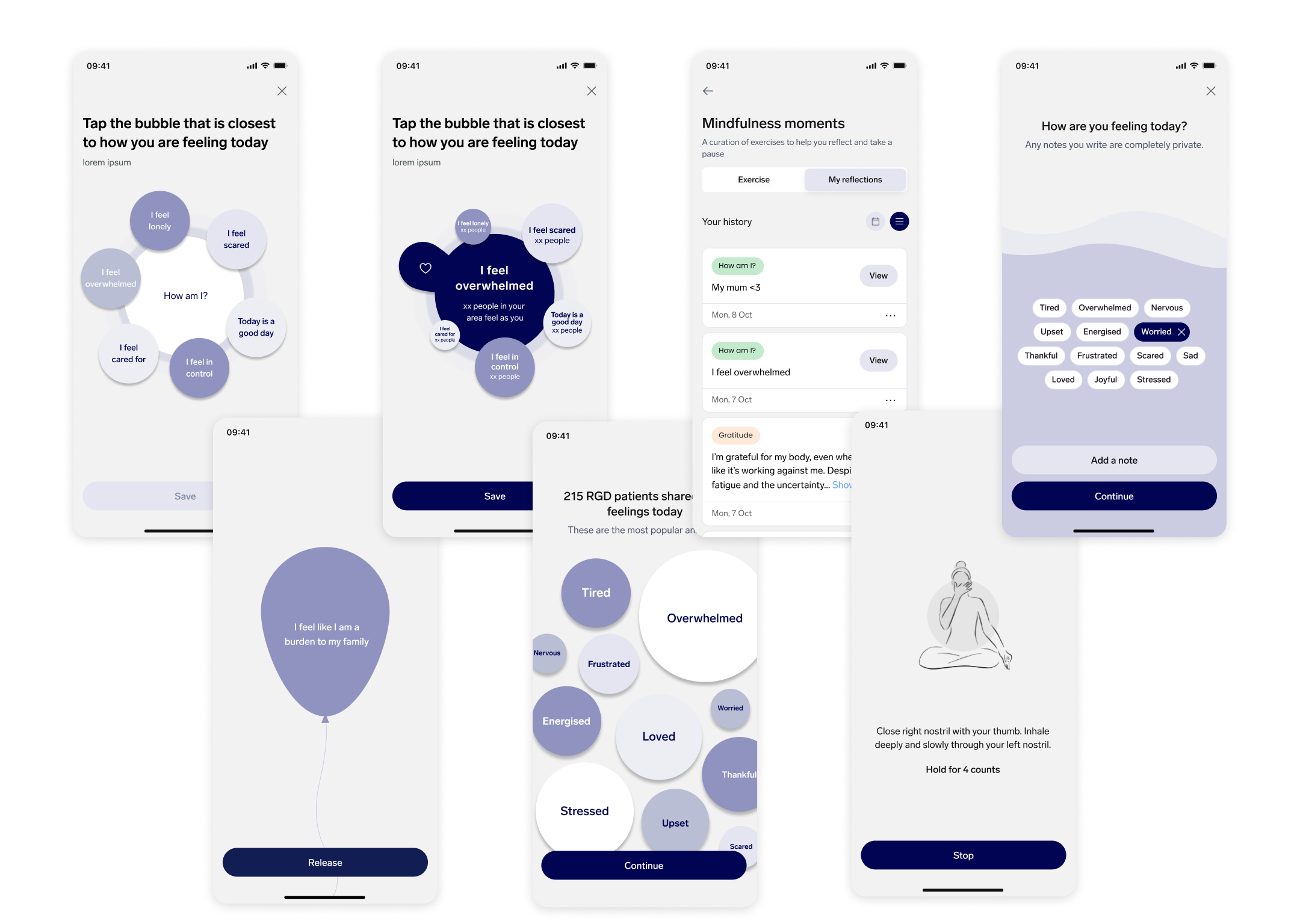
Concept exploration
Mindfulness activities, breathing exercises and patient community.
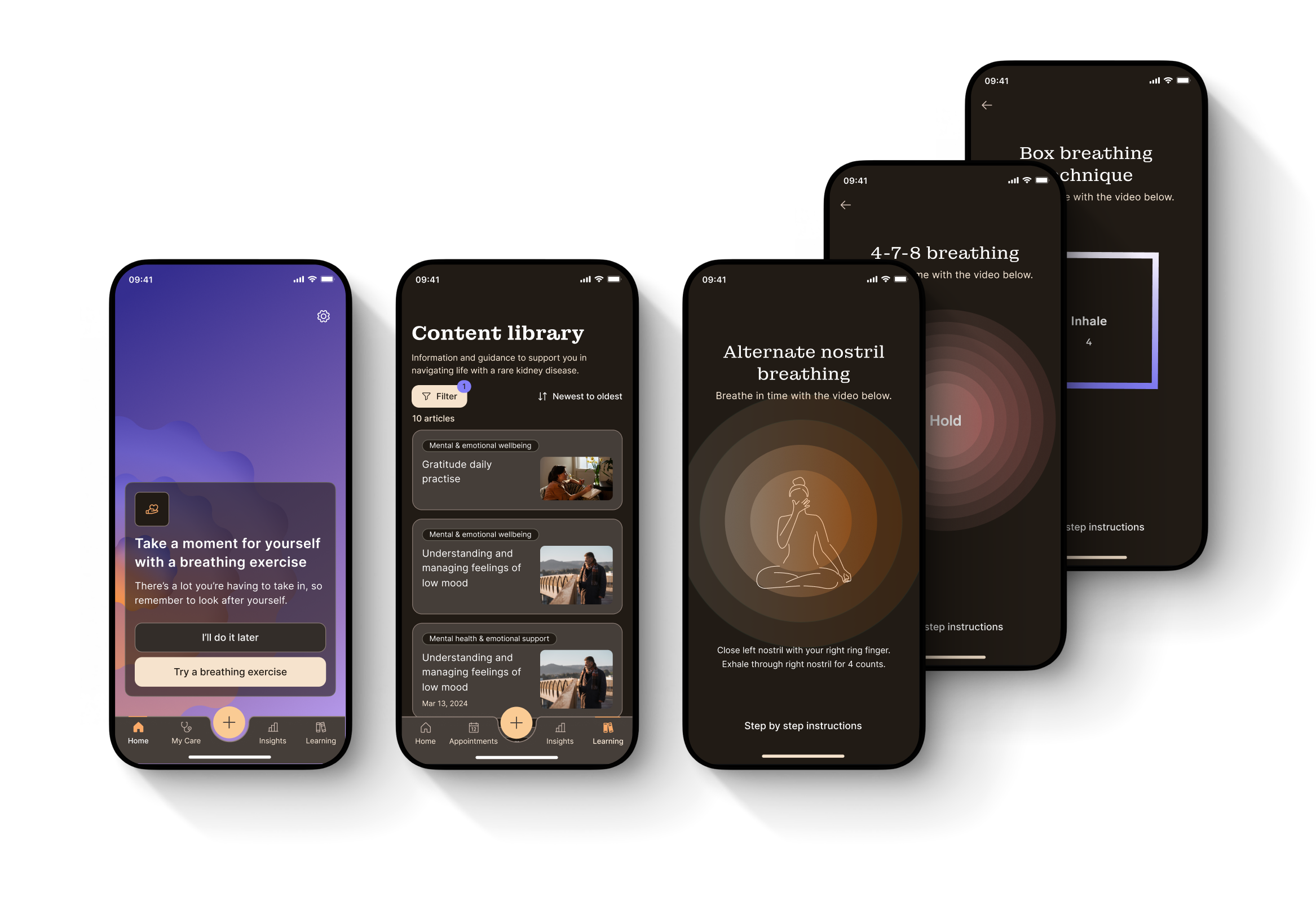
Final UI
Notifications, content library and breathing exercises.
Nelia in discussion at hlth Europe 2025.
Improvements
Many patients were unaware of the benefits of regularly measuring blood pressure at home (HBPM). Many experience white coat syndrome, a condition where clinical situations cause stress.
43% patients have never received advice about HBPM from doctors.
40% patients documents inaccurate HBPM due to user error.
“White coat syndrome is real. People who have never experienced this never understand how scary it is. As soon as they come near me with one of those machines, my BP goes sky high.”
Video of solution: Step-by-step guide, customizable notifications and camera-based monitor recognition to enable fast documentation
We were experiencing high numbers of downloads, but low levels of sign ups. Patients shared that the pre-sign up flow was not convincing enough.
60% drop-off from feature promotion screens to first in-app action.
63% patient said videos snapshots would increase sign up likelihood.
Profile creation was relocated to proceed the sign up screens, building commitment bias and providing us with more data about drop-offs. Videos were add to the promotion screens and onboarding notifications were personalised.
“When I saw the video of different symptoms, it not only gave me a sense of motivation, it made me feel less alone. It reminded me that I’m not the only one experiencing this.”
Video of solution: Videos of the app in action added to promotion screens, profile creation straight away.