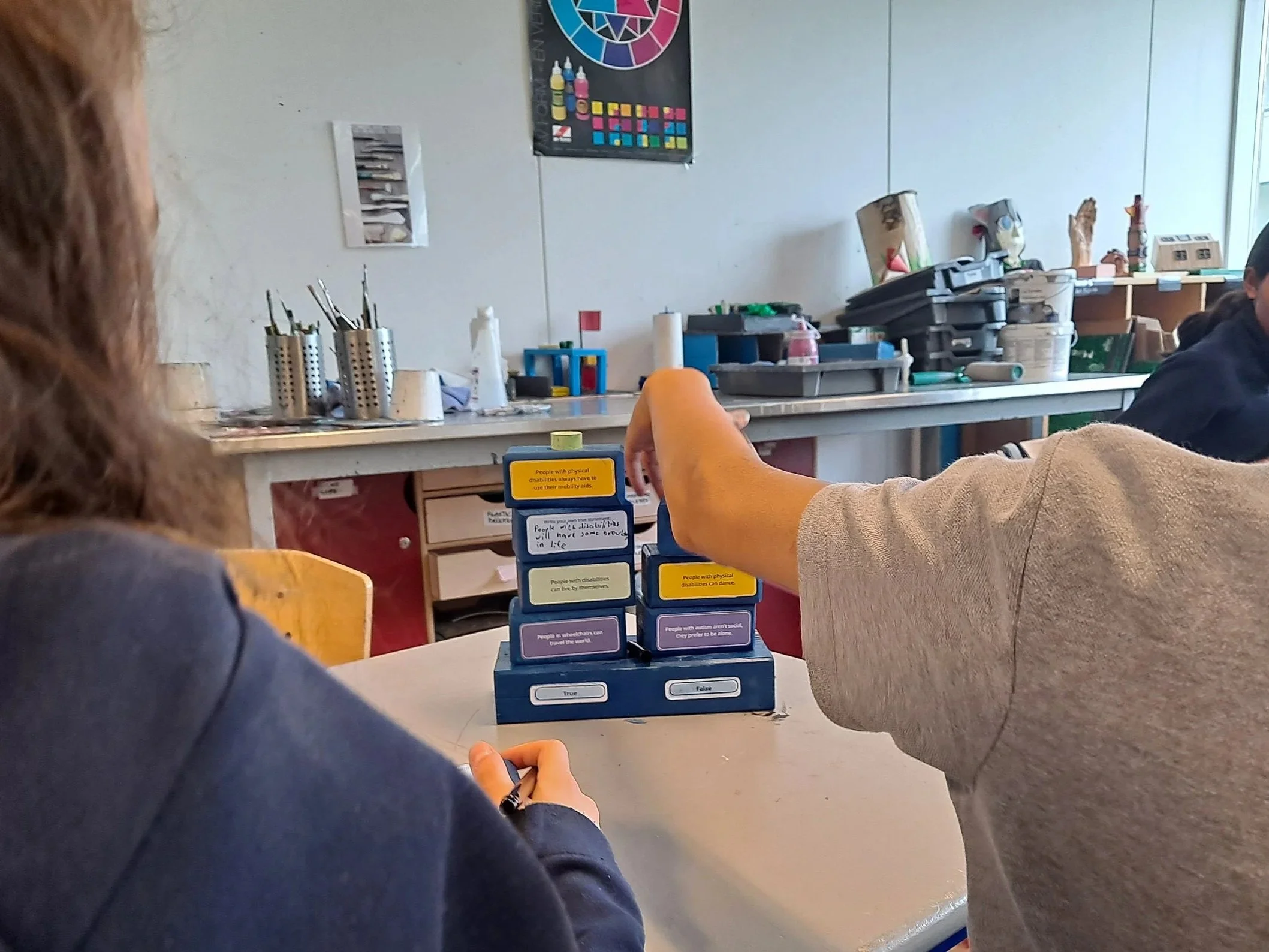
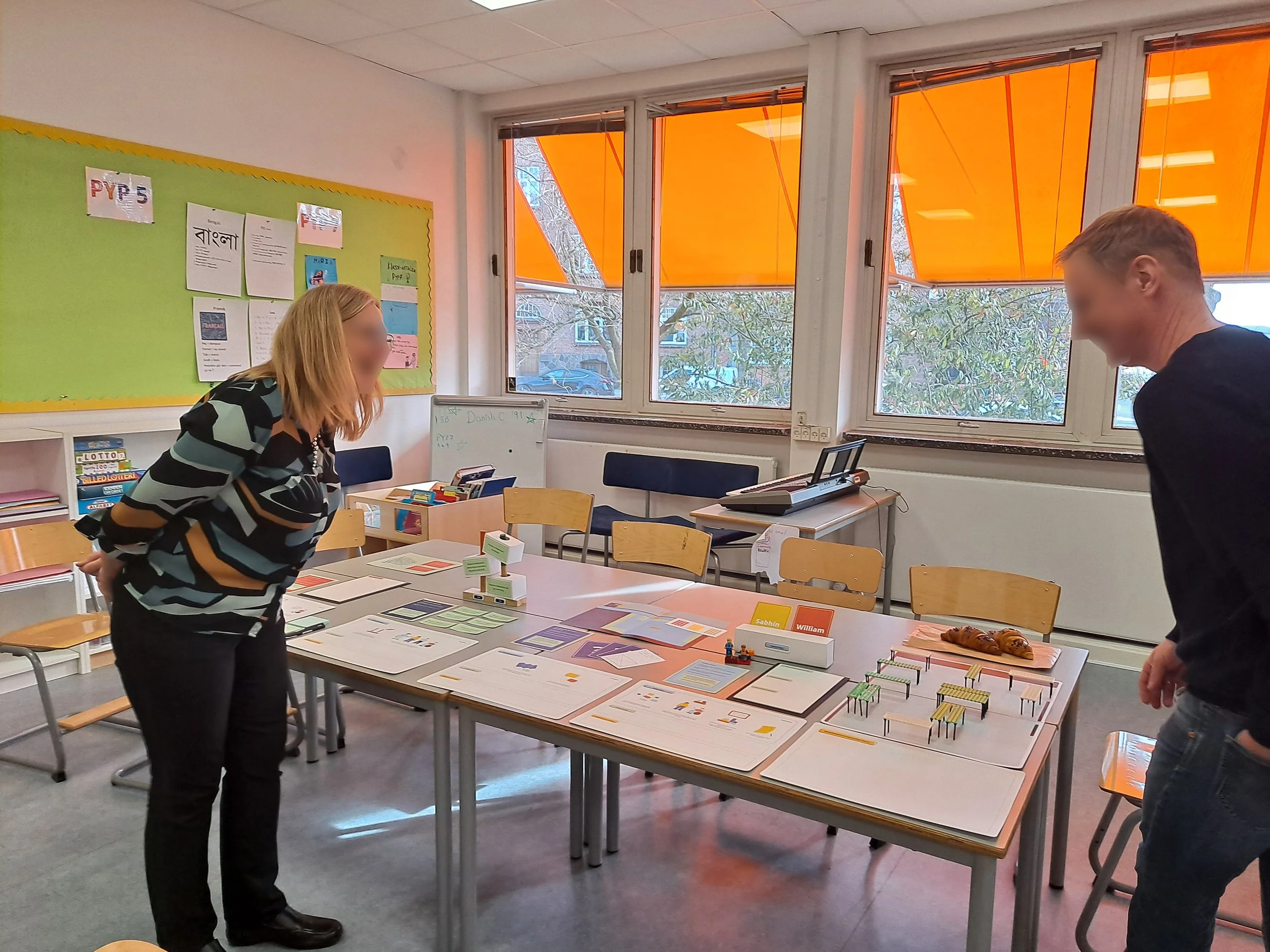
Masters thesis project, workshop with Aarhus International School
Winner of the Teknisk Landsforbund Scholarship.
Selected for the 17th International Conference of Design Principles and Practices, Lisbon.
Featured in the BEVICA Universal Design Showcase.
Runner up in the DDcated pitch at 3 Days of Design, Copenhagen.
Masters thesis accolades
Challenge
1 in 4 people have some kind of disability. Ableism, conscious or unconscious, affects the entire design of our society, resulting in reduced access to services and opportunities.
Encouraging positive behaviours in children from a young age is one way of preventing biases from forming. Providing children with the opportunity to work with and learn from people with disabilities is a key step in breaking down assumptions and facilitating understanding.
Solution
A learning program for primary schools that educate their students on disabilities and inclusivity.
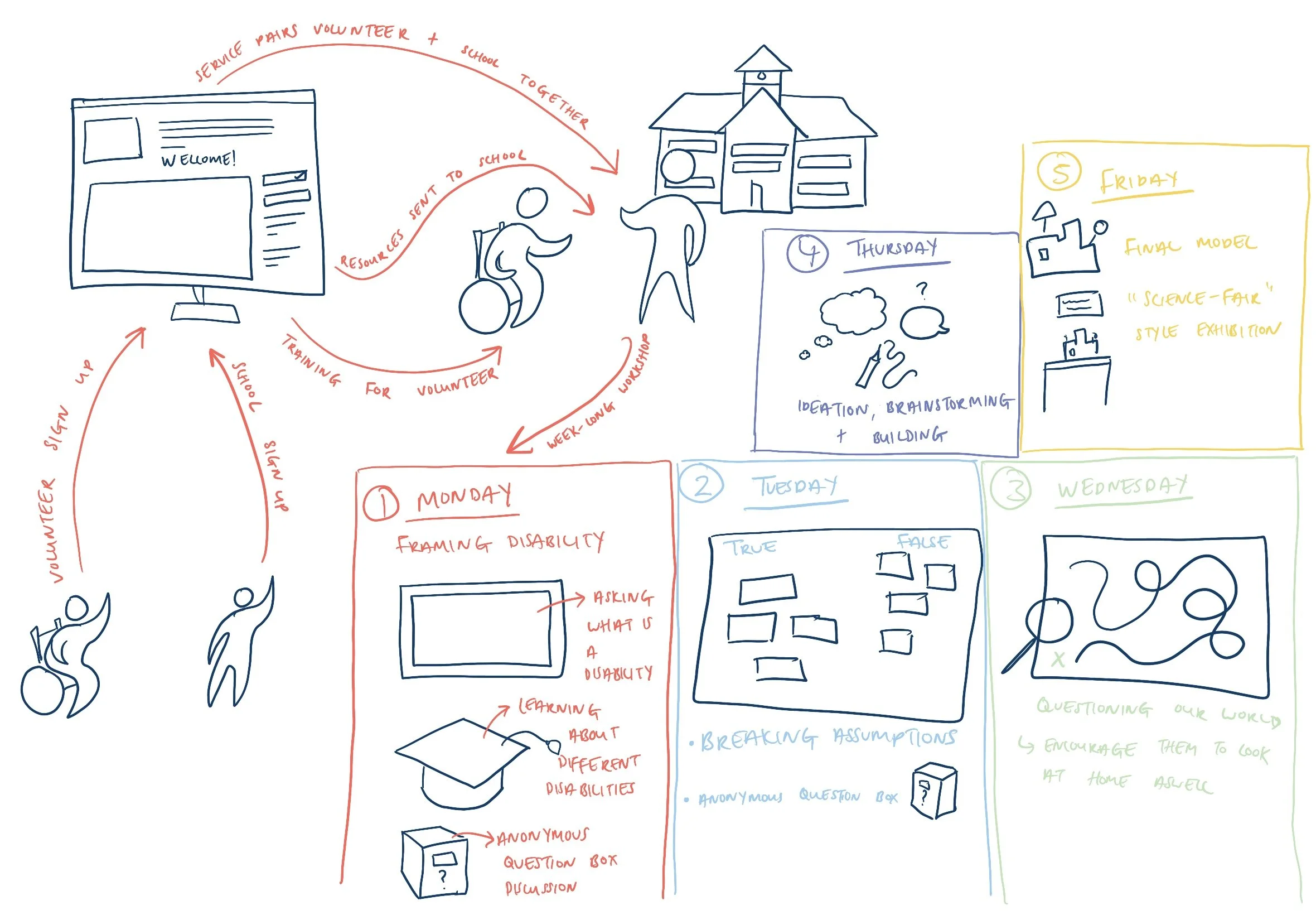
Schools are connected to an Expert; someone with lived experience of disability. With support from a Program Coordinator, the Expert hosts a workshop that focuses on four pillars of learning:
Framing disability
Breaking assumptions
Questioning our world
Taking action
My Responsibilities
The Masters thesis was a solo project, including the following activities;
Research
Interviews, site visits, observation sessions, probes, surveys, seminars, investigative workshops.
Analysis
Identification of insights, key pain points, user journeys.
Concept exploration
Sketches, rough prototyping, testing sessions, collaboration workshops.
Collaboration
Co-creation with school teachers, disability advocates, accessibility experts, people with disabilities and Aarhus municipality.
Create
Design of workshop agenda, learning goals, success criteria, workshop materials, storyboards, videos, style guide, service blueprint, website.
Praise for the project
“This project is needed, it’s necessary, and it needs to start happening around the world. It has to happen on the ground level where the kids actually are rather than from the top down.”
“This taught me what “disability” really means and I realised they’re practically like us... We really need to try make the world fair for everyone. ”
“I often can’t play with the other kids because of my disabilities, but I could do all of these activities! It also gave me a chance to talk about my own experiences with the other kids, I really liked that.”
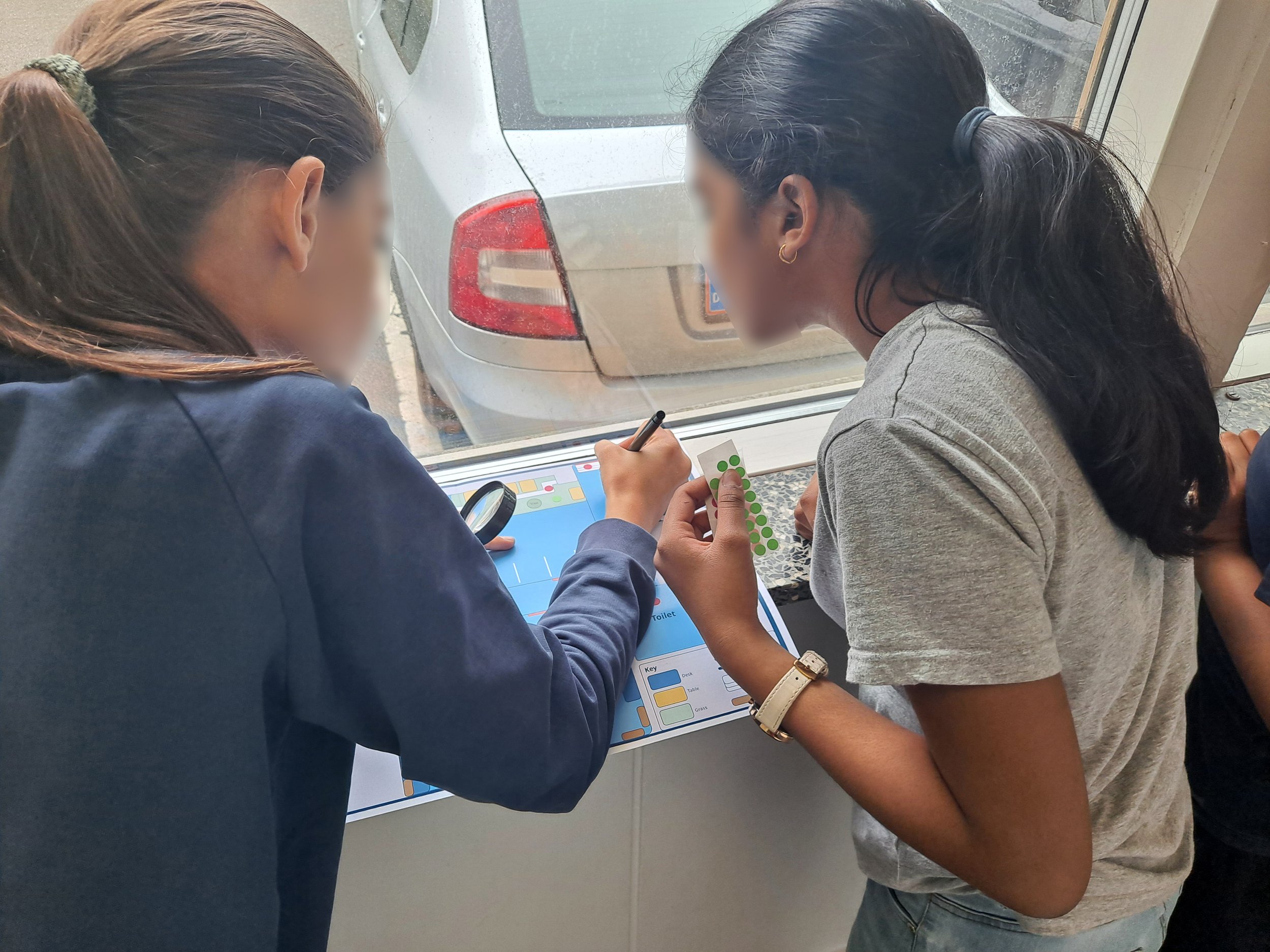
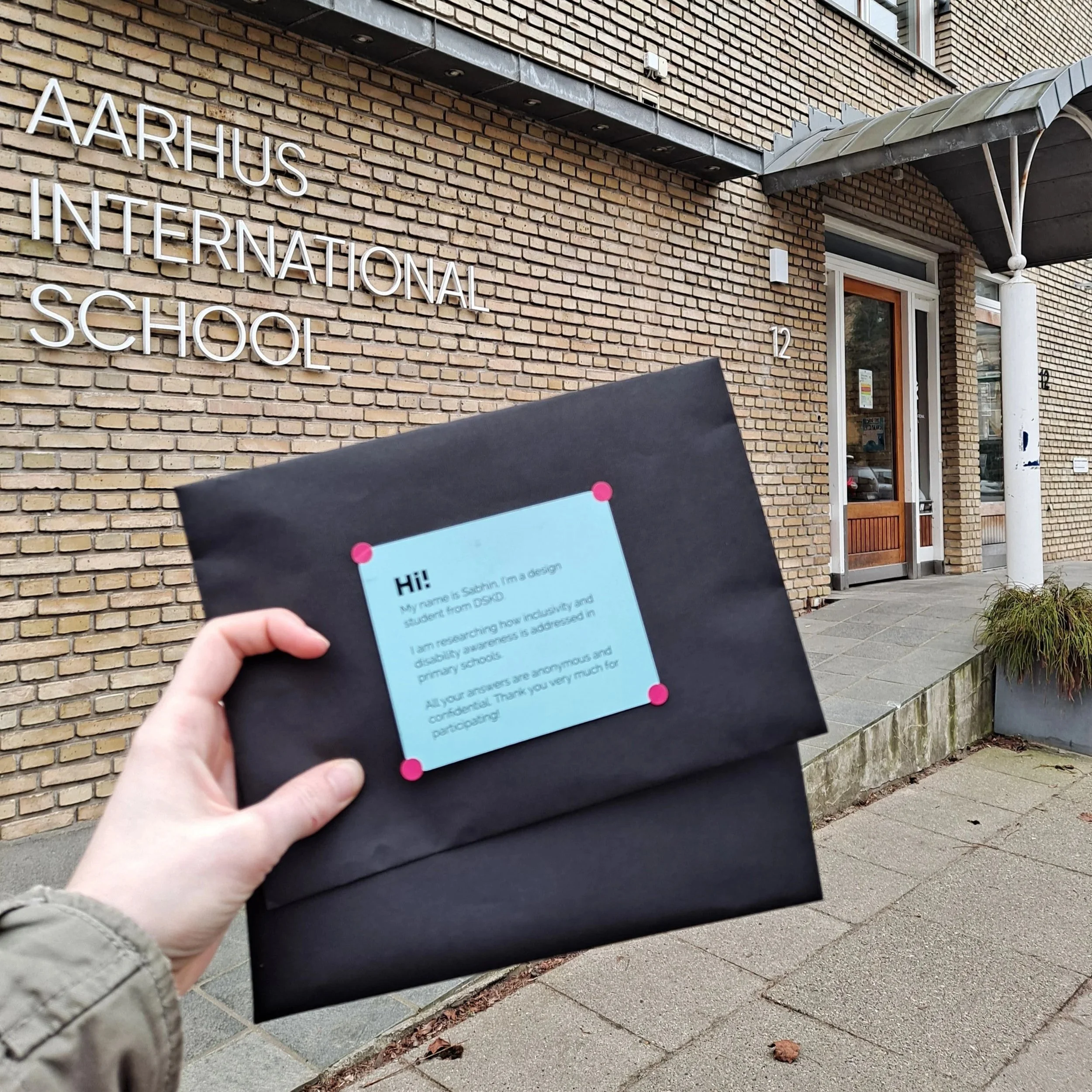
Masters thesis project, workshop with Aarhus International School.
Pain point
70% of young people with disabilities experience chronic loneliness. The primary cause of this loneliness was a lack of understanding from the non-disabled population.
Job to be done
Provide opportunities for young people to meet and engage with people with disabilities. Youth clubs and schools were identified as ideal environments to facilitate this.
“It’s very important that children feel comfortable interacting with us, know how best to help and support us, and are encouraged to learn more about disability. Having the right approach at a young age will help them to have the right attitudes in their adult lives.”
“We need to build empathy rather than sympathy. To get that ingrained in kids from a young age is powerful.”
“If people talk to enough people with disabilities, they learn through interaction, not curriculum.”
-
![]()
Cultural probes for teachers
-
![]()
Ideation and storyboarding
-
![]()
Co-creation workshop with teachers
-
![]()
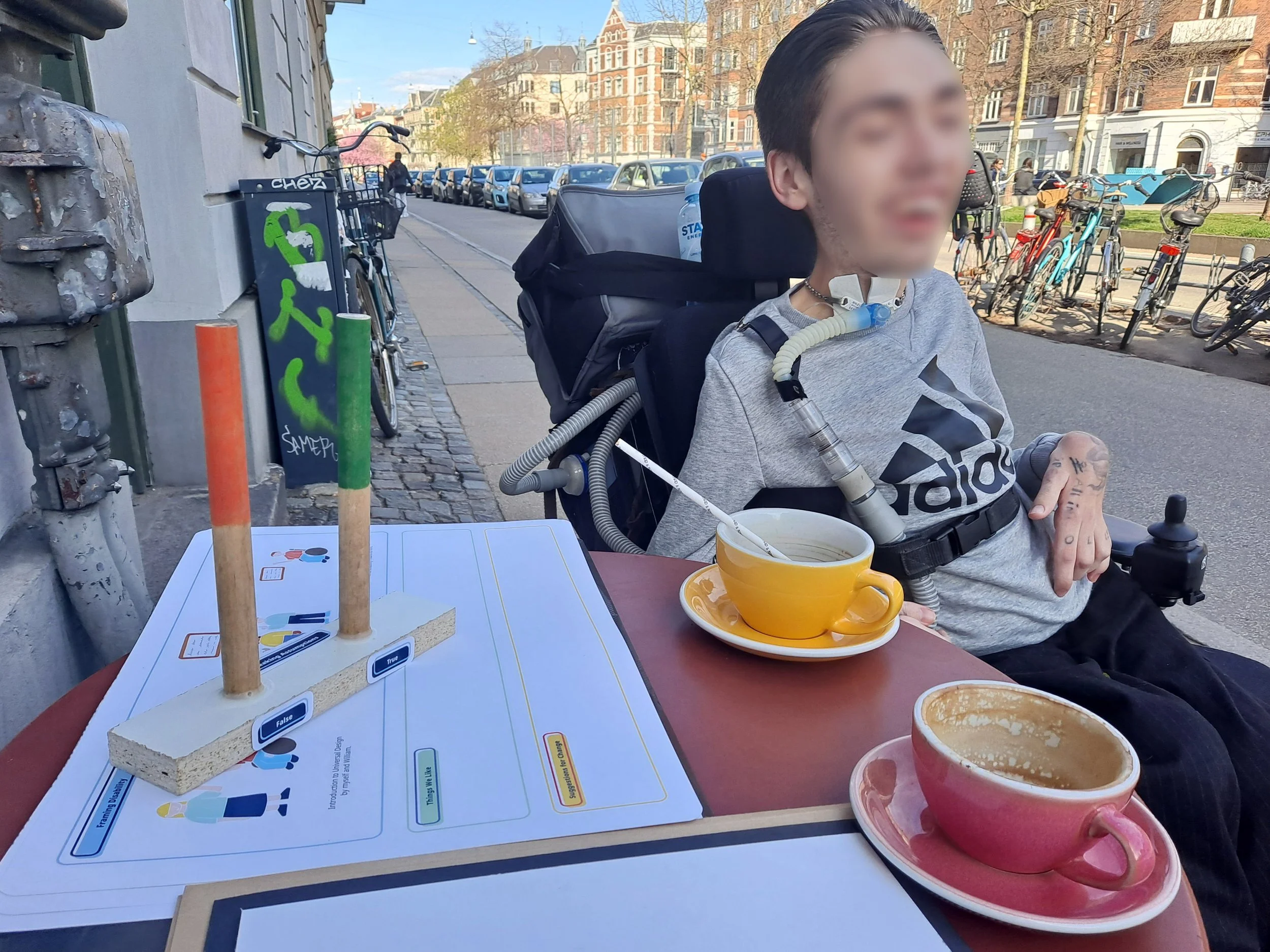
Co-Creation with William, Chairperson of SUMH
-
![]()
Online workshop with PWD
-
![]()
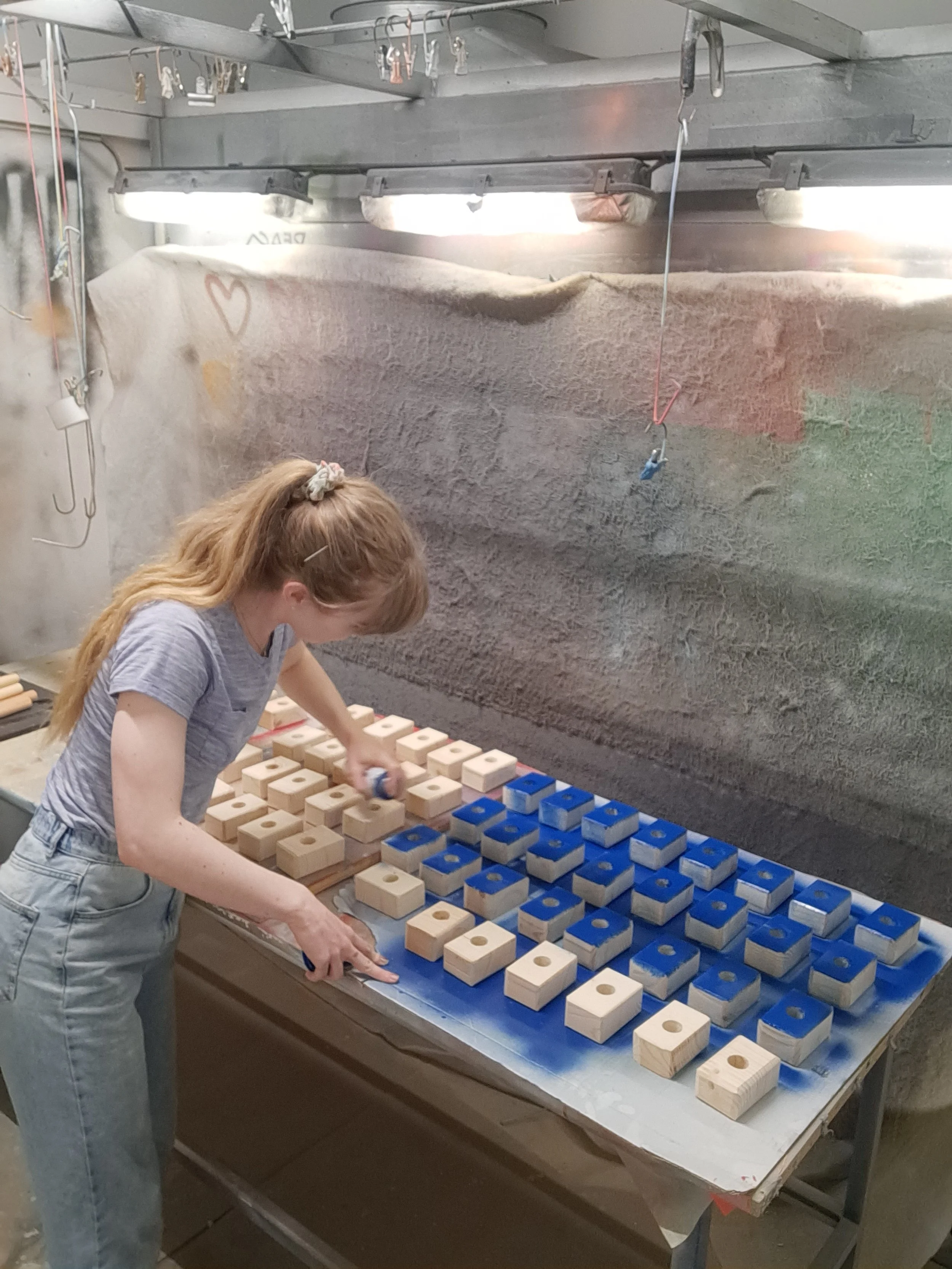
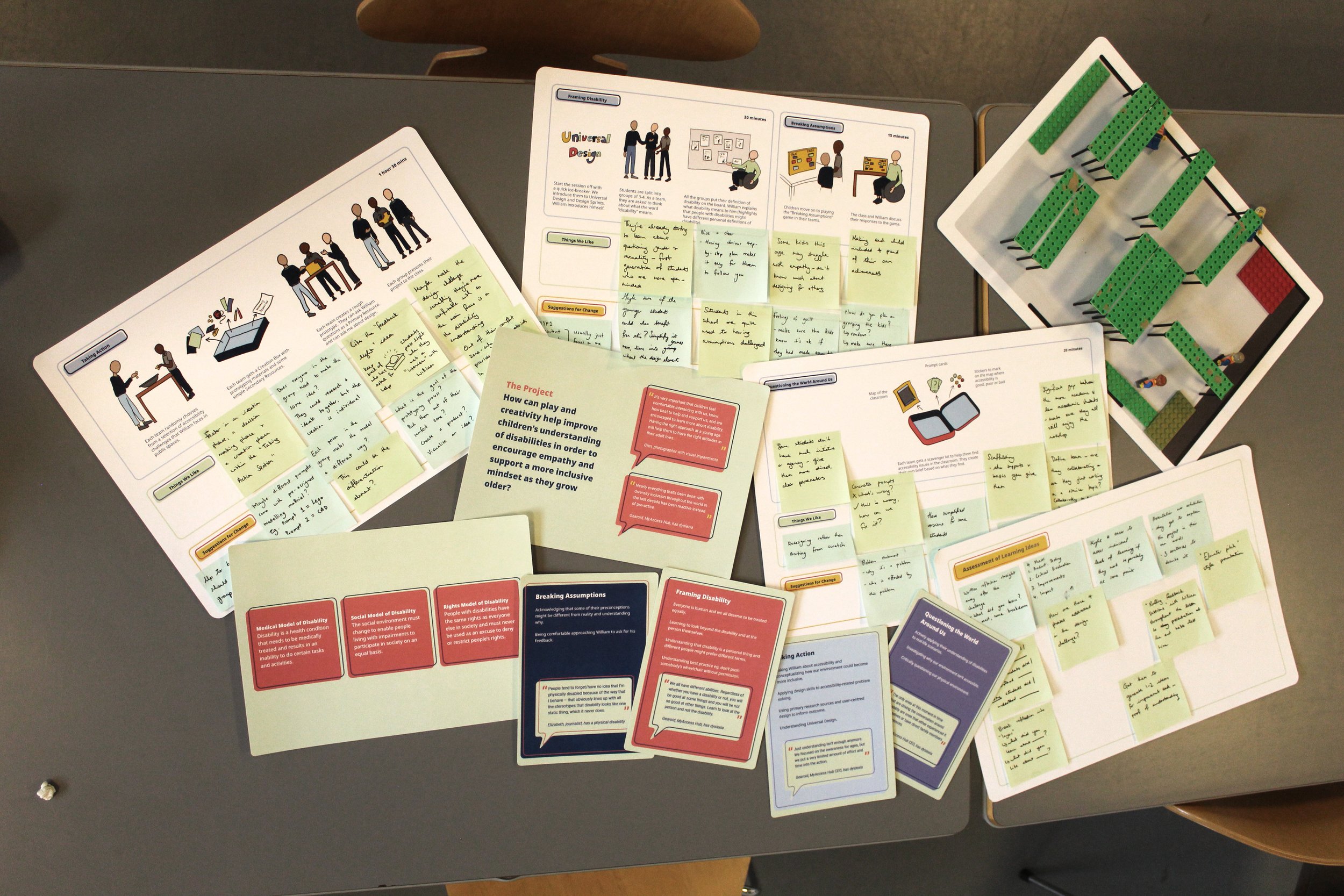
Creation of workshop materials
-
![]()
Quotes from PWD
-
![]()
Concept exploration
-
![]()
Outputs from co-creation sessions
-
![]()
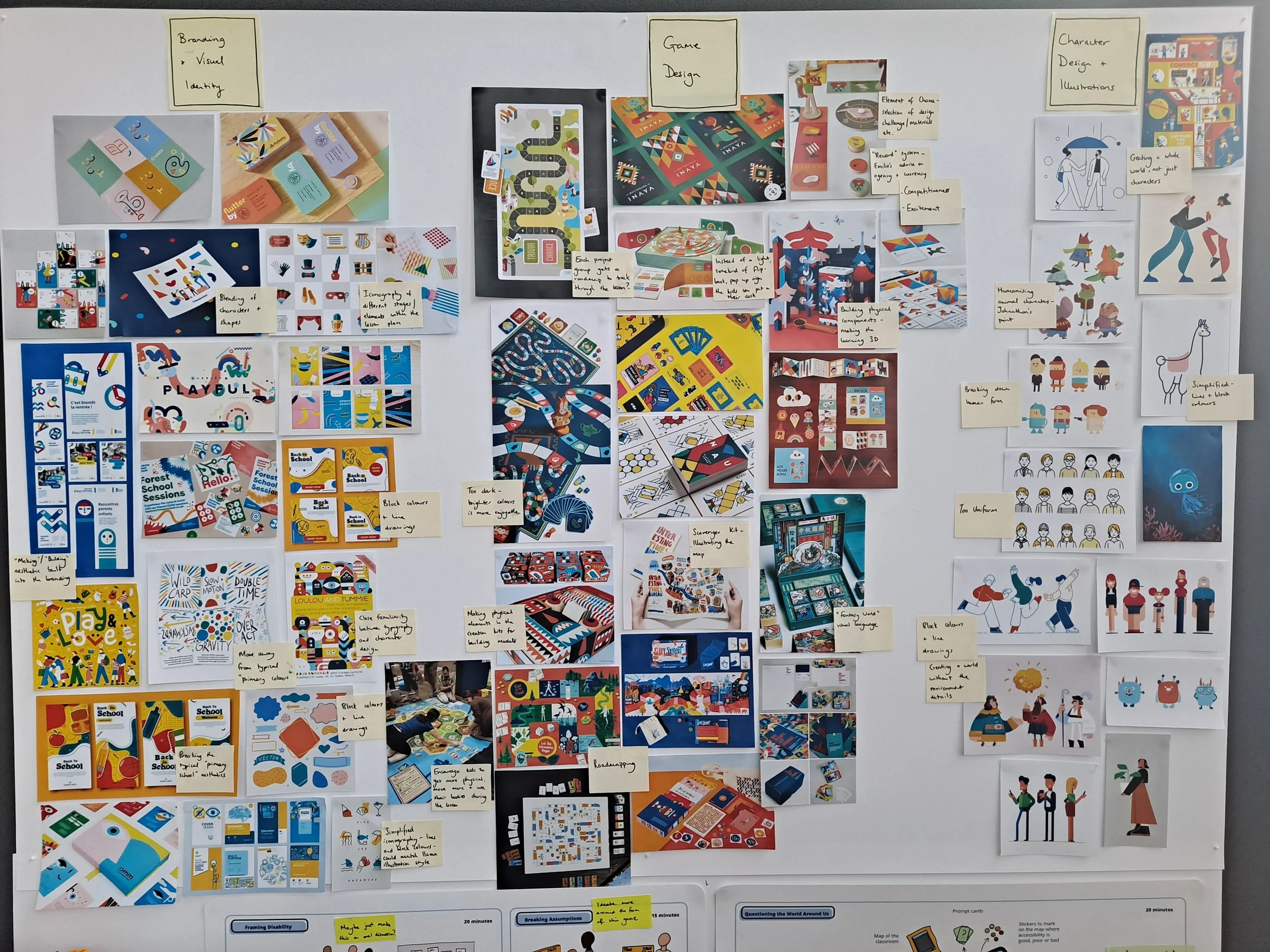
Visual identity moodboard
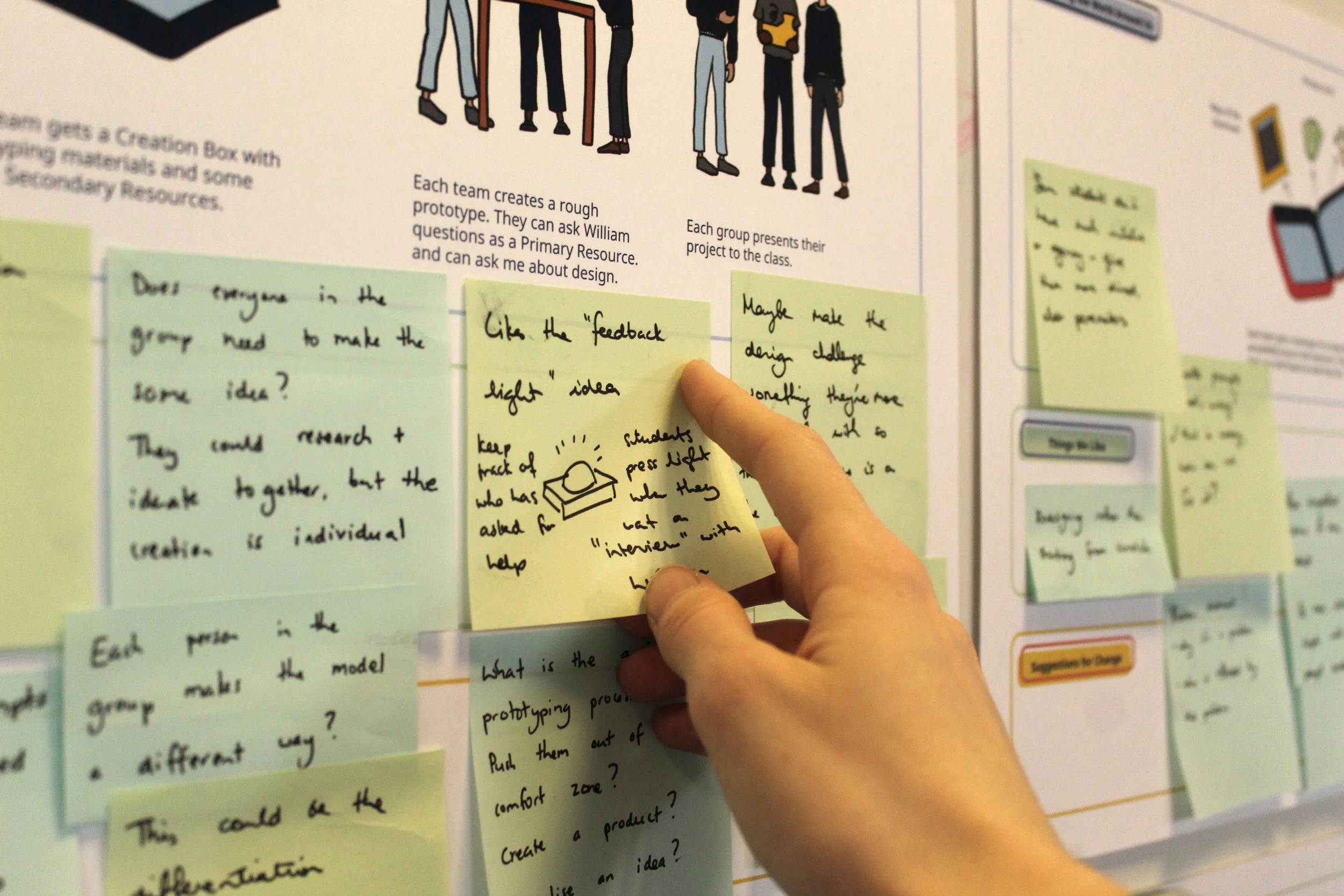

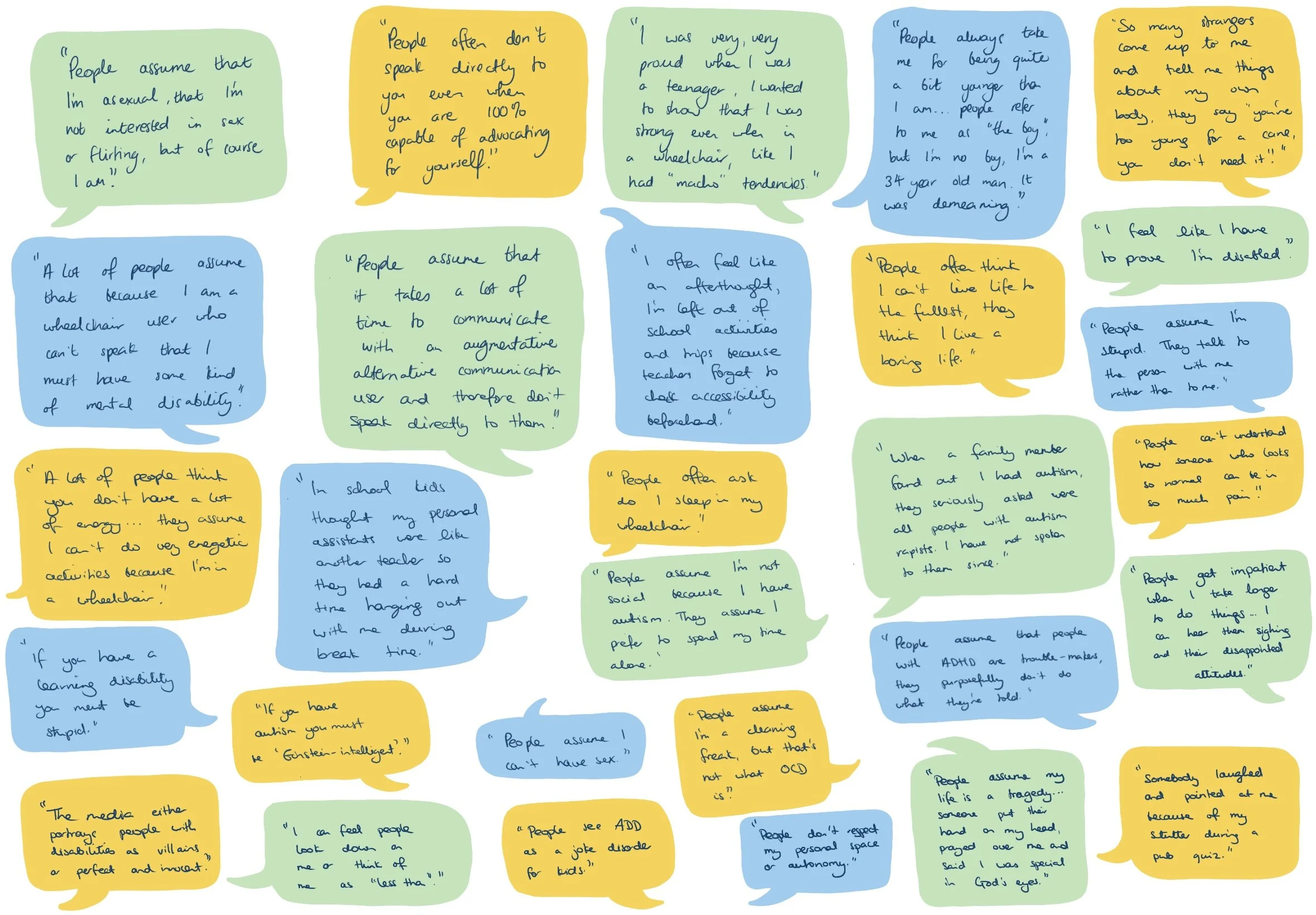
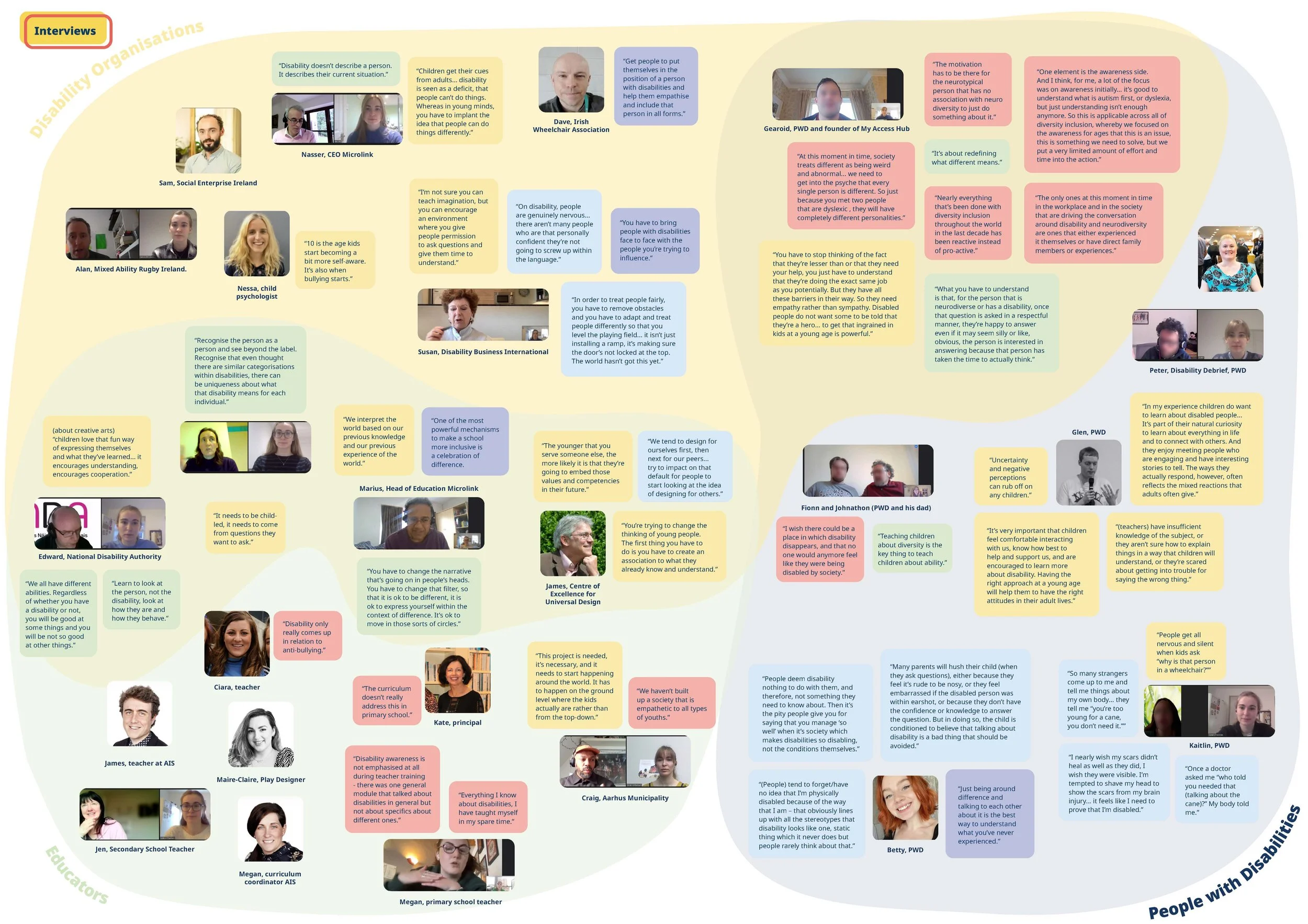
Map of interviews and key takeaways.
The concept
Based on the research phase, key areas of learning were identified. A lesson plan was created and physical materials were built to facilitate the learning activities. The concept was tested in two locations; Aarhus International School and Youth Club A54.
William, the Chairperson of SUMH, acted as the Expert, while I took on the role of the Program Coordinator.
-
![]()
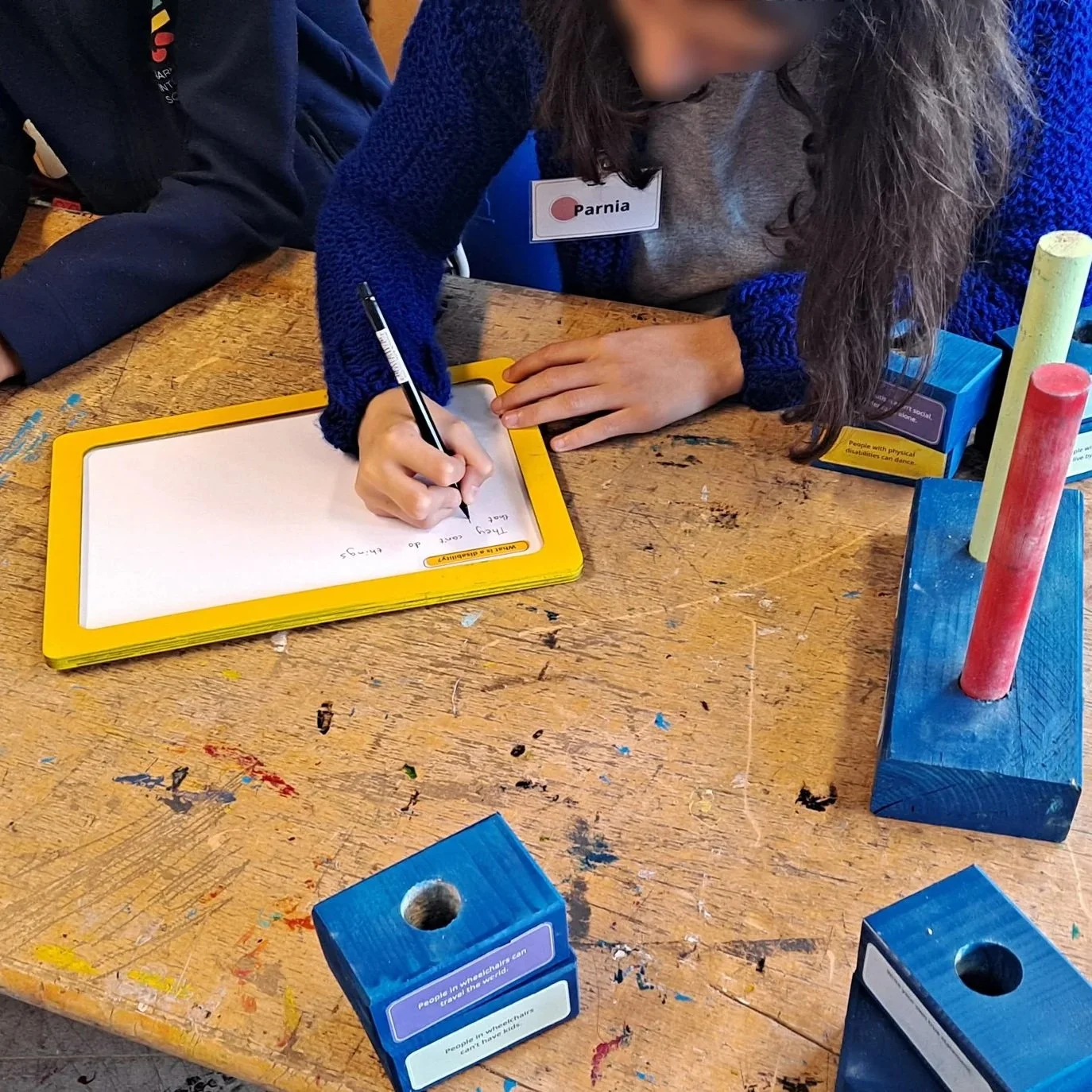
Framing disability
Learning goal
Everyone is human and deserve to be treated equally.Activity
The kids wrote down what they thought disability meant, then discussed it as a group. William explained the social model of disability. -
![]()
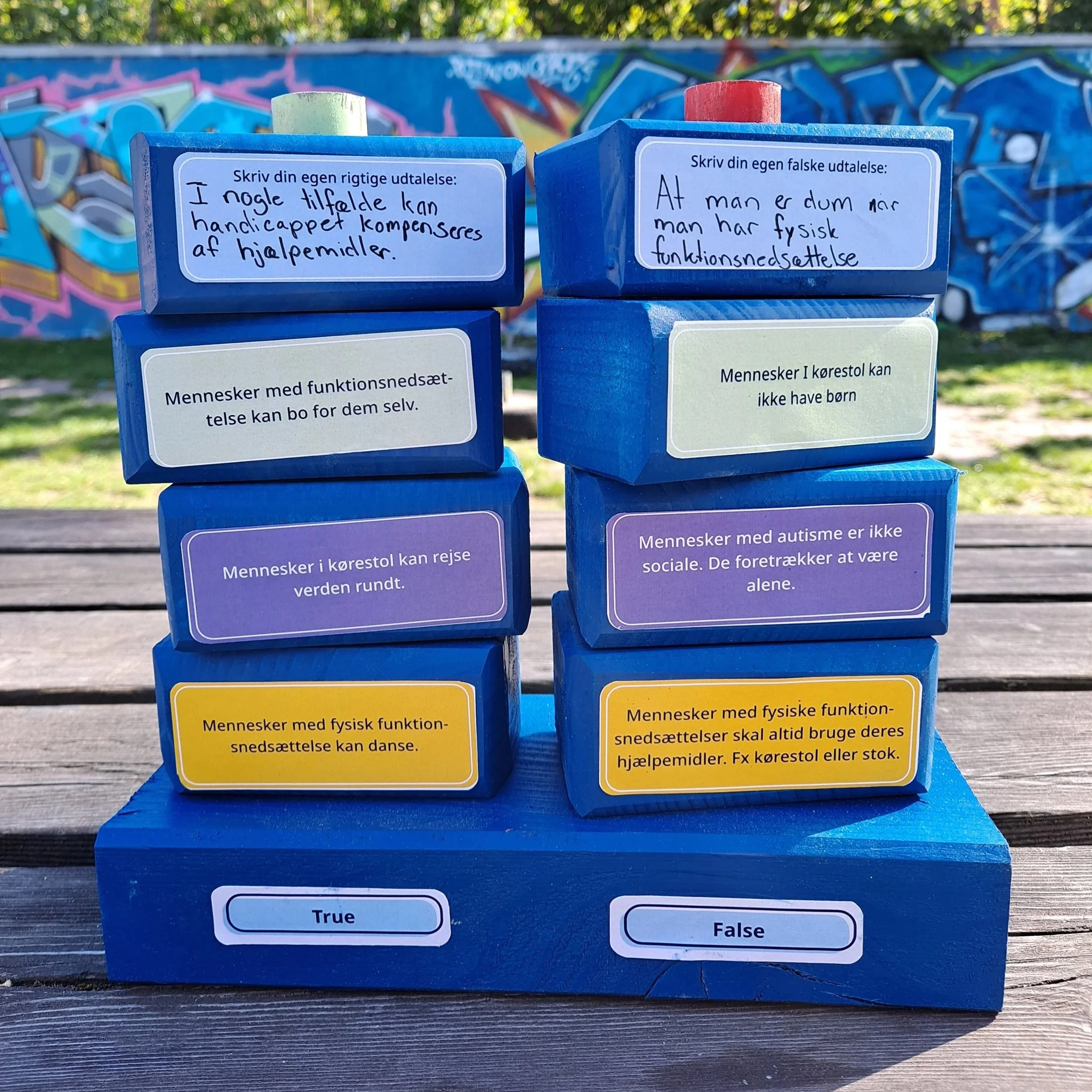
Breaking assumptions
Learning goal
The kids learn to challenge their own preconceptions about disabilities.Activity
Kids received a selection of statements about disabilities and sorted them into true and false. Again, their responses were then discussed as a group. -
![]()
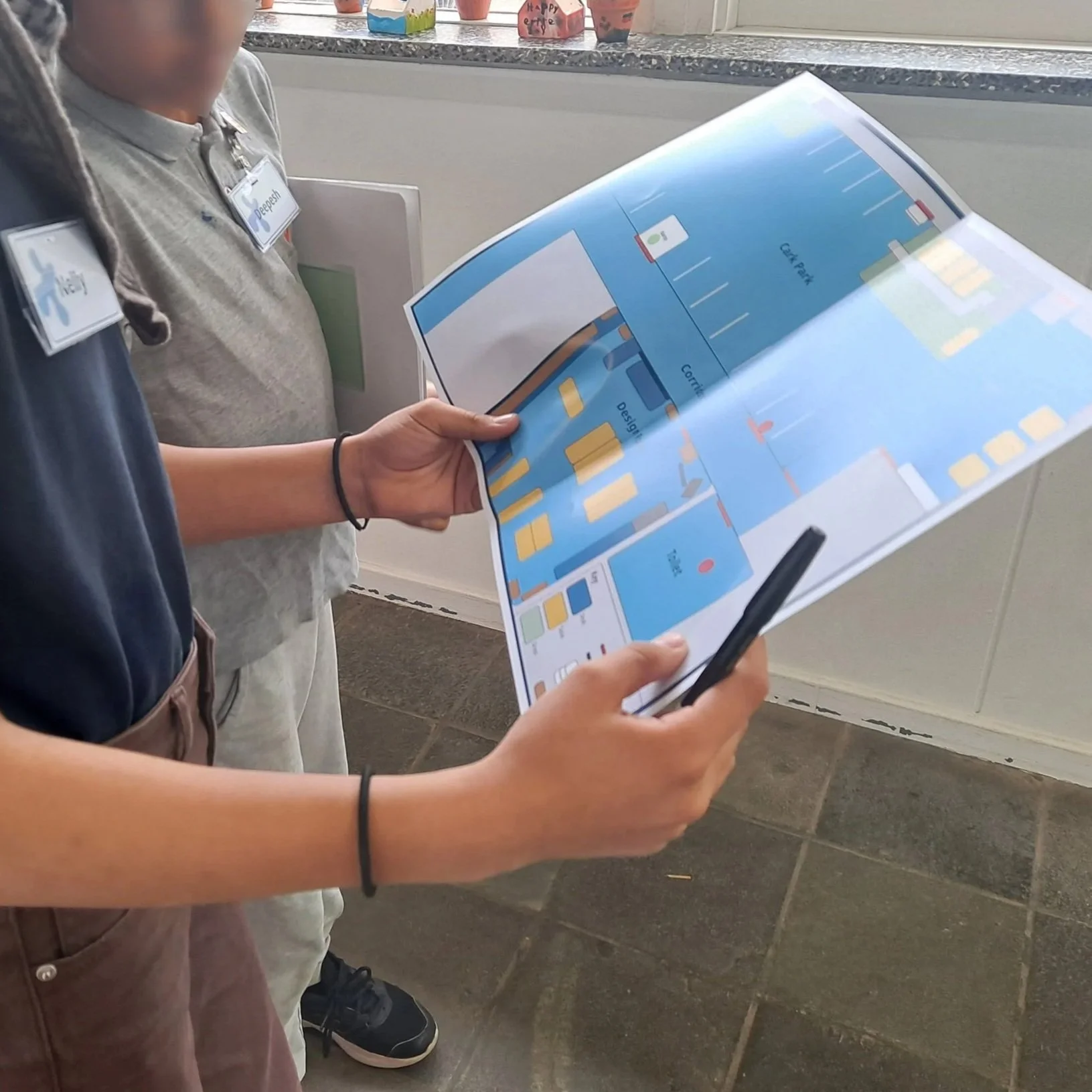
Questioning our world
Learning goal
The kids learn to identify barriers in their own environment.Activity
Kids were given maps of their immediate surroundings, and asked to find examples of good and bad accessibility. They also received prompt cards if they needed help. -
![]()
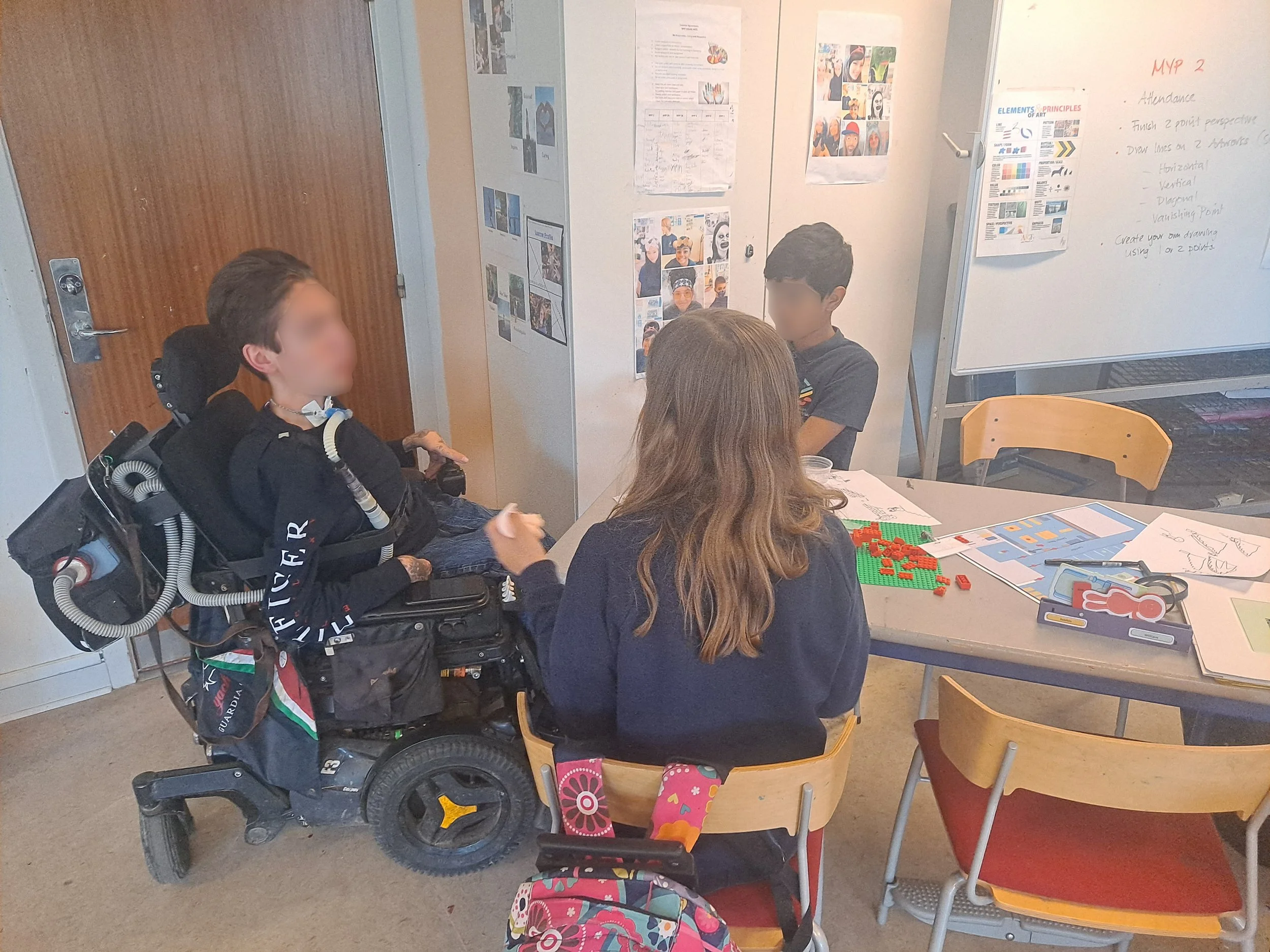
Taking action
Learning goal
The kids challenge the design of their surroundings and create solutions.
Activity
The kids chose one of the identified barriers to redesign. They drew sketches interviewed William, and created prototypes of their ideas.
Descriptions of concepts from the kids.
The learning materials
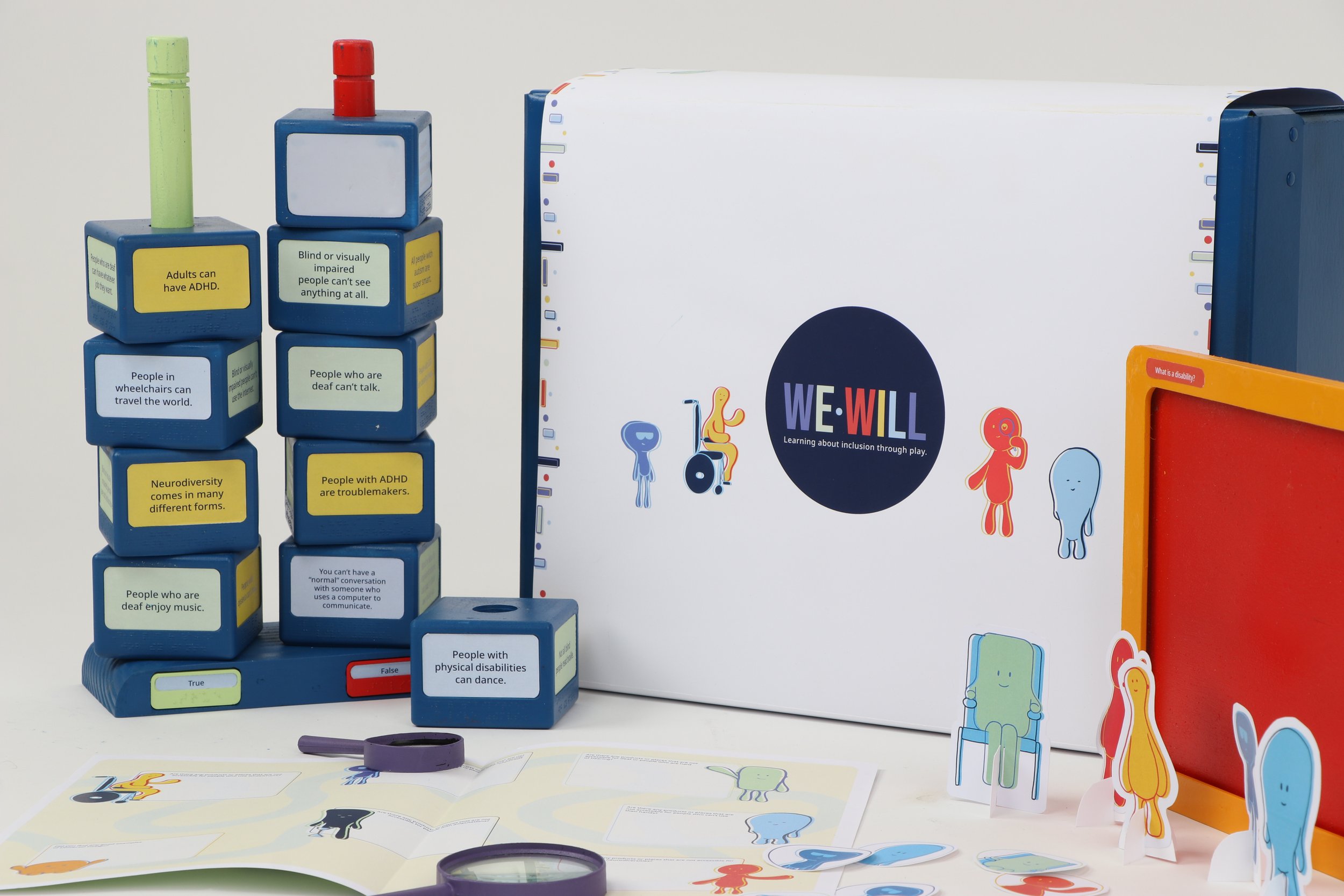
Learning kit for teachers.
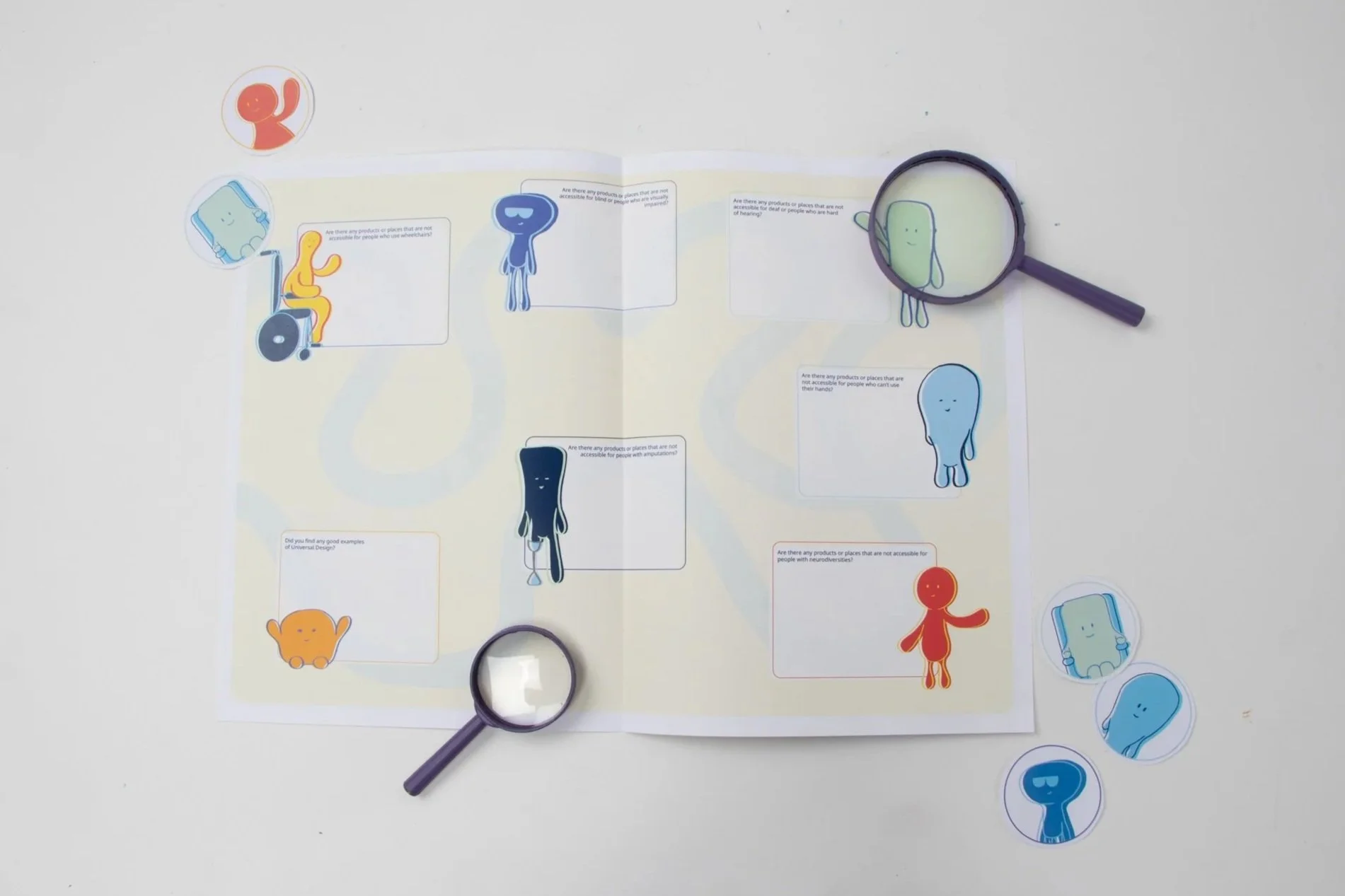
Questioning our world map redesign.
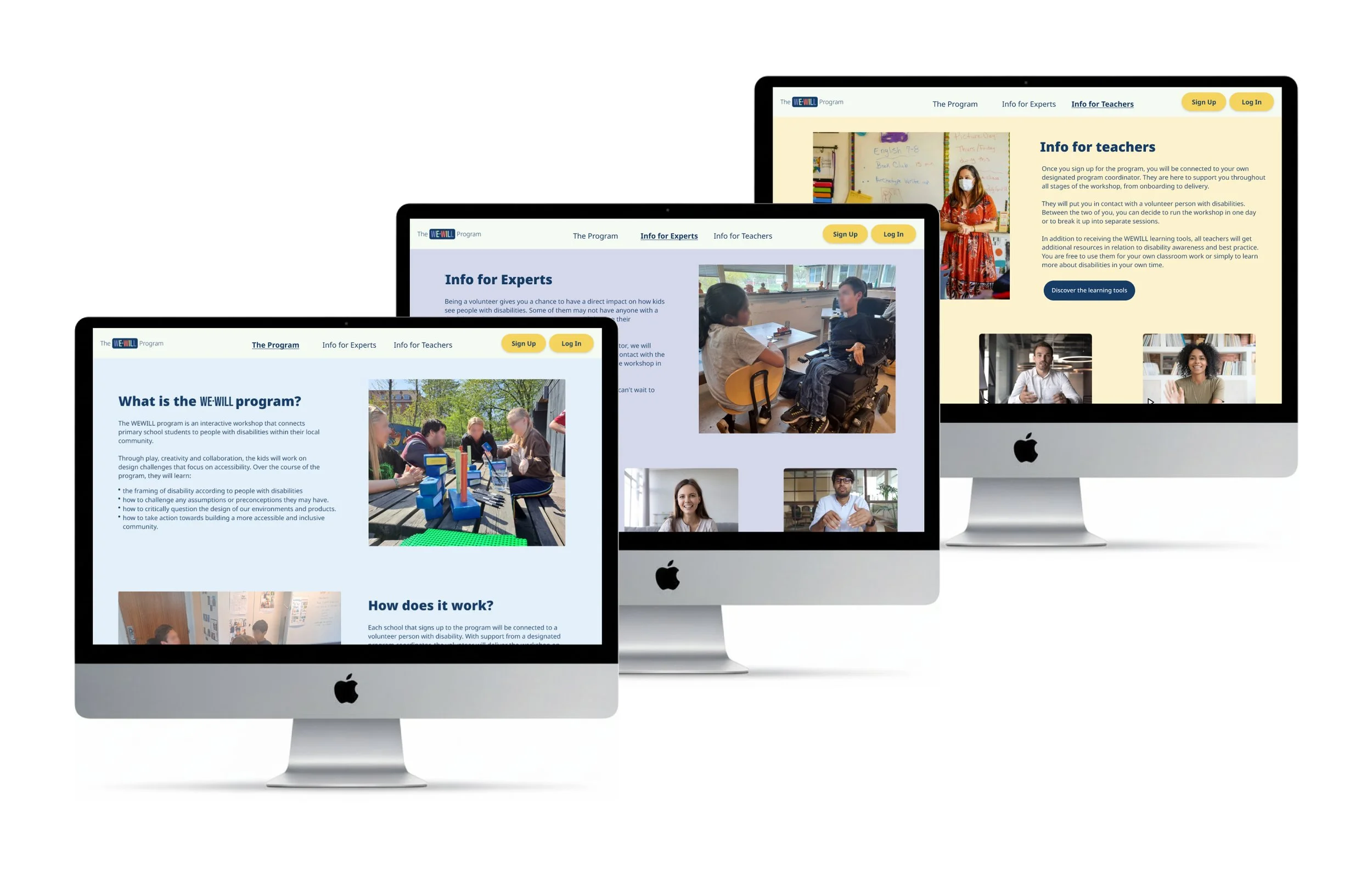
Website and digital versions of learning materials.
Redesign of materials
To make the “Questioning our world” section applicable to a variety of environments, participants are asked to find examples of different types of inaccessibility instead of receiving a map of their own environment. This included finding examples of barriers that affect:
wheelchair users and limb amputees.
visually impaired individuals
people who are deaf or hard of hearing
various neurodivergent communities (ADHD, autism etc.)
The project in the public eye
Video of the project shown at the Bevica 150 year anniversary.
Interview with Enchabel.
Presentation at the International Conference of Design Principles and Practices, Lisbon.